“Reminder: Remember to be gentle with yourself and the expectations of your goals. Some goals can only be achieved during different seasons of your lifetime and that’s okay. It’s okay to not be able to achieve all you want to achieve when you want to achieve it. It’s also okay to make small goals as well. Take your time with your goals and give yourself time to achieve them. Not everyone’s life will turn out the same and no one has it all together, so no need to compare another person’s accomplishments to yours. Everyone is different and there is no timeline to success.”
Although the year just began and we’re only in the second month, I’ve been faced with the most difficult challenges to date. From the toughest mental health battles to realizing my insecurities and toxic traits, this year is showing me to put my peace first.
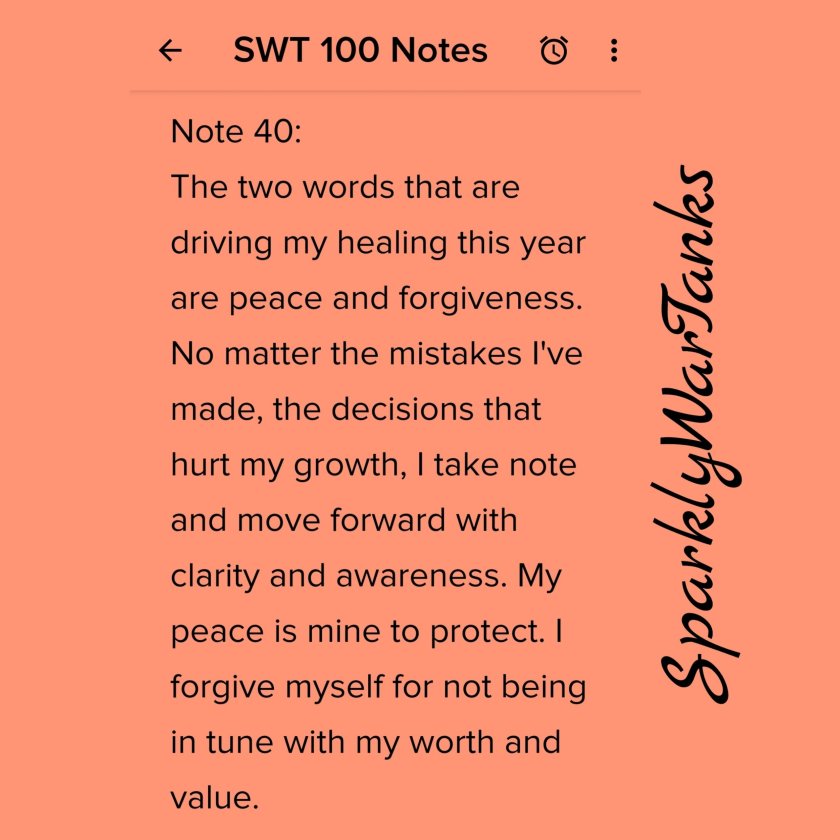
I forgive myself for accepting what I don’t deserve. I move forward in claiming and proclaiming my worth and value.
If I were to tell you that the lists of things you’ve done, the relationships you have, or the job titles you’ve held don’t make you who you are, would you believe me? If I were to tell you that you are whole just because, would you think I’m wrong?No matter what we do or who we think we have to become we are fundamentally valuable and worth living every single day. It doesn’t matter how much we get done, or how much we’ve been through, every day we wake up we hold the power of our value and worth and that never changes.”I am” despite of anything that follows that statement.
Another event in 2 weeks! This one is extra special to me!
Description: SparklyWarTanks and NAMI NYC will be working together to host “All I Can Be is Me” as part of NAMI NYC’s expressive arts creative events! And, guess what?! I’m working with The Mighty for this event too! “All I Can Be is Me” is a creative confidence-building and goal setting event where we will reflect, build community and have fun! As we utilize positive character traits to affirm and manifest within ourselves, we will also set goals and plant a seed of power and motivation to continue to be the amazing people we are.
Details:
Date: February 29th, 2020
Time: 5:30 pm – 7:00 pm
Event Space: NAMI NYC Metro
Address: 505 8th Ave, New York, New York, 10018 Suite 1103
If you’re in New York and would like to attend let me know on the Facebook event page.
It’s been a really rough 2020 already. It’s tried to knock you down, step on you, and declare your defeat. What 2020 doesn’t know is you already declared that no matter what, you will figure out how to bounce back EVERY SINGLE TIME. No matter how complicated or complex the struggle, nothing will overcome your resilience.
I know you’re hurting but I also know you learned so much through the pain you endured.
You learned that:
It’s okay to be sensitive.
It’s okay to cry and express emotions.
Learn early how to love and accept yourself.
You are different and that fact will catalyst your passion.
People will look out for themselves.
Put yourself first because no one else will.
You are not like everyone, your self-care looks different.
You don’t need to be with someone to be whole.
Your empathy is powerful, build it up.
You have a soft and gentle spirit, protect yourself, learn how to say no.
Your mind will tell you a lot of lies, declare your power and control over yourself.
People have their own trauma and will show it through their behavior, do not take it personal.
Self-awareness is scary but necessary.
Your mind is very very powerful, use it to create and influence change.
Your purpose is beyond what you can fathom, manifest it with all of your being.
Depression and anxiety will not defeat you.
It’s taken some time to learn these lessons, and probably would have been helpful growing up, but you know now and that’s what’s important. You know that your life is valuable although you may feel tortured sometimes. Keep that smile on your face because its beyond beautiful.
Despite the pain, the tears, and the loneliness, you have a job to do. Get up and keep going.
“Have you ever wanted to be taller? Or maybe felt less than because your grades weren’t the best in the class? Ever felt yourself changing in ways that weren’t really like you to fit into a crowd? Comparing ourselves to others and stunting our sense of self-worth to be more like the people around us harms our views of who we are. The more we compare and strive to be what we are not, the more we lose what we are and who we want to become.
How do we shift comparing ourselves to others to accepting and growing in self-love?”
“A gratitude list is a list of things, places, people, situations, or traits about ourselves that we are grateful for. Creating a gratitude list helps us to reflect and think through what’s good about our experiences and life overall. Building a habit of gratitude increases our awareness, knowledge, and point of contact when we find ourselves comparing our lives with others.”
A boundary is a limit or rule we set for ourselves to honor our inner and outer well-being. Whether that boundary is to protect ourselves, to reserve energy, resources and money, to stop ourselves from the urge to continuously give or “save” another, or simply to respect our personal goals and self-worth, it’s essential to build and maintain personal boundaries.
Personal boundaries are what separate us from giving too much of ourselves to things, people, and situations that do not serve our growth and progress. While it may appear ideal to be able to do everything and anything without limits, we cannot and should not exhaust ourselves of our personal needs. We are responsible for what we allow. Whether in relationships (familial or romantic), with friends, at work, or anywhere where we are interacting with others, practicing boundaries helps us to be in tune with ourselves and our values.
Something to Remember: We are not perfect and cannot do everything or please everyone at the expense of our mental, physical, or emotional well-being.
How can we, therefore, set boundaries that will help us prioritize our needs?
Self-Awareness and Boundary Setting
Increasing self-awareness is an important step when building and maintaining personal boundaries. The more we know who we are and what we are okay with, the more we can establish and sustain boundaries that serve us best. Understanding the balance between too much, too little, and the right amount of energy and effort can push us in the right direction in creating healthy boundaries.
Here are some questions you can ask yourself that will help you reflect and understand whether you need to set stricter boundaries:
How do I feel?
How would I rather feel?
Should I say no?
Do I have time to spare?
Does this make me feel uncomfortable?
Is this benefiting me?
Am I overexerting myself?
Do I need to do this?
Do I want to do this?
Can I do this?
Do I need time for myself?
What is okay/not okay for me to do/say?
When do I speak up?
Does something need to end?
What can I change?
What do I have control over?
Getting into the habit of asking questions is not only a good idea for self-awareness, but also for increasing confidence. Becoming reflective in understanding what we deserve and in what we will tolerate will also aid in a better understanding of self-worth.
How Boundaries Help Strengthen our Mental Health
Boundaries allow us to build a stronger connection with ourselves. Understanding who we are will help us to become more centered and mindful of what is happening around us and to us. Stern boundaries will also help us to prioritize self-care, become more direct and open as well as vocal about our needs, beliefs and values. Being able to say no and express how we feel will give us the autonomy we need to improve our sense of self-worth. We will feel more comfortable expressing ideas and thoughts without shame, embarrassment, or hesitation.
Healthy boundaries can look like saying no when necessary, balancing self-care with work, cutting ties with toxic people and situations, speaking up without feeling like a burden, putting your needs before anyone else’s unapologetically, accepting that you cannot change or save anyone and not trying to, and giving yourself permission to feel and reflect without the opinion of others.
Affirmations to help Maintain and Sustain Positive Personal Boundaries:
I set standards for myself and will stick to them.
I know who I am and what is good for me.
I understand my personal boundaries.
I honor myself and my boundaries.
I have a right to my feelings.
I can firmly state my boundaries.
I am confident in my ability to set boundaries with others.
I will say no when necessary.
I am safe.
I am in control of my life.
Next Steps and Final Thoughts
As we move into a space of self-acceptance and self-awareness remember to honor your boundaries and give yourself permission to grow and reflect on your needs. Continuously grow in your boundaries in love and compassion for yourself.
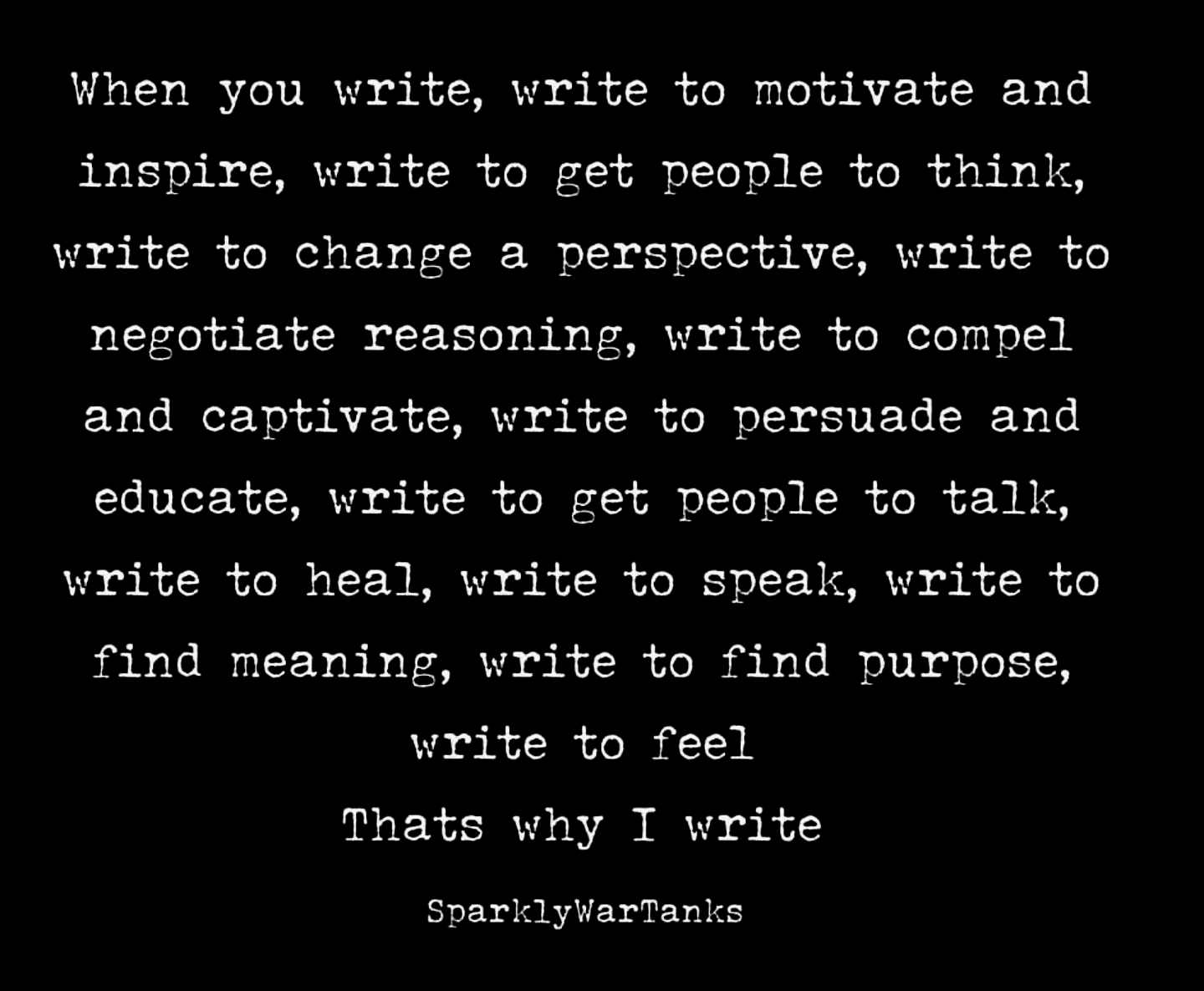
I started blogging in 2015 following a class project in my senior year of college. Unaware of the impact writing will have on my mental health, I maintained a steady habit. When I felt anxious, depressed or even inspired and ready to take over the world, I wrote something. No matter the circumstance or situation, I continued to write. I called this new ignited excitement for writing SparklyWarTanks, a phrase that combines the ideas of being “pretty and ”together” with also being at ”war” and ”struggling.”
SparklyWarTanks became an extension of me, who I wanted to become and the perspective I wished to build. My everyday writing changed and transformed into therapy writing; writing about pain, acceptance, identity, and struggle. I wrote to feel free, to challenge myself, and to improve my mental wellness. Writing gave me strength, peace, and my own voice.
Finding My Voice: Asking Important Questions
As SparklyWarTanks progressed during the first year, themes and patterns emerged in my writing style. I began to write mental health articles along with my motivational and creative content. Eager to build a more stable and workable sense of self, I felt refreshed when my imagination flooded with ideas.
To keep the content flowing, I often asked myself important questions. Whether these questions were related to me directly, or for my target audience to grapple with (mostly young adults, especially women, figuring themselves out), my goal was to challenge notions of self-development and self-acceptance. I wanted to construct a progressive view of growth.
Some of the questions were, but not limited to:
How do I feel?
How do I want/deserve to feel?
Who am I?
Who am I becoming?
What do I want to achieve?
Through writing, I began to create and mold myself while also advocating for a communal and collective sense of awareness for my readers. As a community, what do we need to do to improve how we see ourselves? I wanted to help others while also helping myself. I wanted my growth to help others grow as well.
Continuing in the present…
Writing and Creative Expression: Creativity and Mental Health
Progressing in my writing craft and finding who I want to be through my projects and perspective is nothing short of soul-satisfying. Writing and creative expression not only helps me build a new perspective on growth, vulnerability, and self-awareness but also helps me manage my depressive and anxious symptoms as well. The more I write and ask myself important questions, the more I’m able to identify my t riggers and heal through them.
Different genres and approaches I experiment with in my writing include:
Affirmations/Declarations
Motivational Quotes
Bulletins
Notes
Poetry
Activities
Challenges
Topics such as self-talk, self-care, self-love, self-worth, power, reflection and potential guide my views and shift how I think, especially during the tough days. I write to think through what I believe; I write to build and create my truth. Mental
health and self-development now connect with one another. How I want to feel includes taking care of myself physically, mentally, and emotionally.
Are you thinking of starting a writing habit?
Next Steps: You Can Write Too
Writing can be for all of us. Whether for fun, to vent, or to get your thoughts onto something and out of your head, writing can help! Writing can be whatever you make of it. If it’s to share or to keep to yourself, whatever you create is something to be proud of.
Consider these questions when starting to write:
Why am I writing?
What do I want to write about?
What do I want to say?
Who do I want to say it to?
What overall message do I want to portray?
Need help? You can check out my SkillShare class to get started!
Experiencing a panic attack is exhausting, draining and can take days to recover from. While we sometimes do our best to prevent an escalation into a panic attack, they still can happen. How do we feel like ourselves again following a panic attack? What are some positive coping techniques we can use to improve our self-care?
Resting and Relaxing
Resting and relaxing helps rejuvenate lost energy after experiencing a panic attack. Taking time to recuperate allows us to clear our minds and take the necessary steps to recover.
Resting may look like:
Taking it easy.
Asking for help with chores or errands.
Taking a break from demanding responsibilities.
Prioritizing time alone or with trusted family and friends.
Giving ourselves permission to slow down assists our recovery process and opens our perspective to the best methods of self-care.
Mindfulness
Mindfulness is the skill and habit of focusing awareness on the present moment. The better we become at cultivating nonjudgmental awareness of our thoughts, feelings, environment, and experiences from moment to moment, the more we can learn about ourselves and our stressors. Mindfulness teaches us to notice, accept, and let go rather than dwell and latch onto past thoughts or future worries.
Mindful Daily Activities
Along with resting and relaxing, it’s also beneficial to practice mindfulness while doing everyday activities like eating, drinking, walking, etc. Becoming mindful while engaging in daily activities enables us to clear our minds only to focus on how we are interacting with our environments and ourselves during each moment.
Tip: To eliminate worry, center the senses in current activities rather than what can happen in the future or what happened in the past. Ask yourself what is happening in the here and now.
Mindful Meditation/Controlled Breathing: Sitting in quiet spaces practicing mindful meditation and controlled breathing are also useful coping mechanisms to calm the mind and body. Creating a rhythm of breaths, inhaling and exhaling for the count of five for example, while also clearing our minds of worry helps in recentering focus and control.
Reminder: Mindfulness reinforces our ability to gain control and restore our inner wellbeing.
Reminders and Positive Self-Talk
Accompanying mindfulness is reminders and positive self-talk to further empower our inner sense of security. Reminding ourselves that we are safe and in control helps us move past our fears and into a calmer state of mind.
Some self-soothing affirmations to try include:
I am safe.
I am in control.
I can ask for help if I need to.
I release my fears and worries.
I am powerful and in control of my decisions.
Note: Positive self-talk increases confidence and supports inner strength despite discouraging feelings of doubt and fear.
Identifying Triggers
Our triggers can hinder us from wanting to do the activities we love or want to try. Like mindfulness and positive self-talk, building self-awareness helps us learn more about ourselves and what overwhelms us. One way we can gain self-awareness is by asking important questions.
These questions can be:
What caused this panic attack?
What can I do to prevent possible future spirals and escalations?
What are my next steps?
How am I feeling right now?
Who can I go to for help?
What tools and resources are available to me?
Recognizing and identifying our limits as well as creating boundaries can help us take better care of our mental health. Understanding who we are and what triggers us is a necessary step to preventing future escalations of overwhelm.
Tip: Journaling/Writing can be a helpful tool when attempting to reflect and process what happens after experiencing a panic attack.
Communication
Once we’ve gained some energy and given ourselves time to rest and reflect, we can communicate with others we trust about our experience. This step can be taken during or after our reflection time as processing can look different for everyone.
Reminder: Remember to be gentle communicating experiences with others. Panic attacks do not make anyone a failure or stop any of us from enjoying life or taking risks.
Creativity
Utilizing creativity is not only engaging but can help in the reflection process following a panic attack. We can supplement how we communicate our experience with creative expression.
Asking important questions about an experience can be difficult but using creative prompts in poetry or art can catalyst that process.
Expressing ourselves creatively can be in the form of:
Poetry/Creative Writing
Painting
Digital Art
With creative prompts like:
If you can describe, craft, or create a physical description of the anxiety or feelings following a panic, what would it look like? Would it be a person, place, or thing? Does it have weaknesses and strengths? What is it’s vulnerable points?
Write a letter to the anxiety that leads you to feel overwhelmed. What would you say to it?
Imagine a tree with its roots. Imagine the tree is you. List everything that makes you strong and firm and put them at the roots of the tree. Now, list all of your accomplishments, talents, things that help you keep going and name them on the branches of the tree. As a reminder of all that you are and motivation to move forward, create your tree of life.
Along with using creativity to help process our experiences, we can also use creativity to distract and calm ourselves too. Learning a new craft is both rewarding and fun!
A new craft to try can be:
Sewing
Crocheting
Crafting jewelry
Making keychains
Designing and making stickers.
Sculpting
Next Steps
Now that we’ve learned some tools to bounce back from a panic attack, what techniques are most helpful for you? Self-care is different for all of us so what helps some might not help others and that’s okay! What’s important is feeling better.
Never forget that we are still capable, strong and worthy of whatever we set our minds to despite experiencing moments of panic.
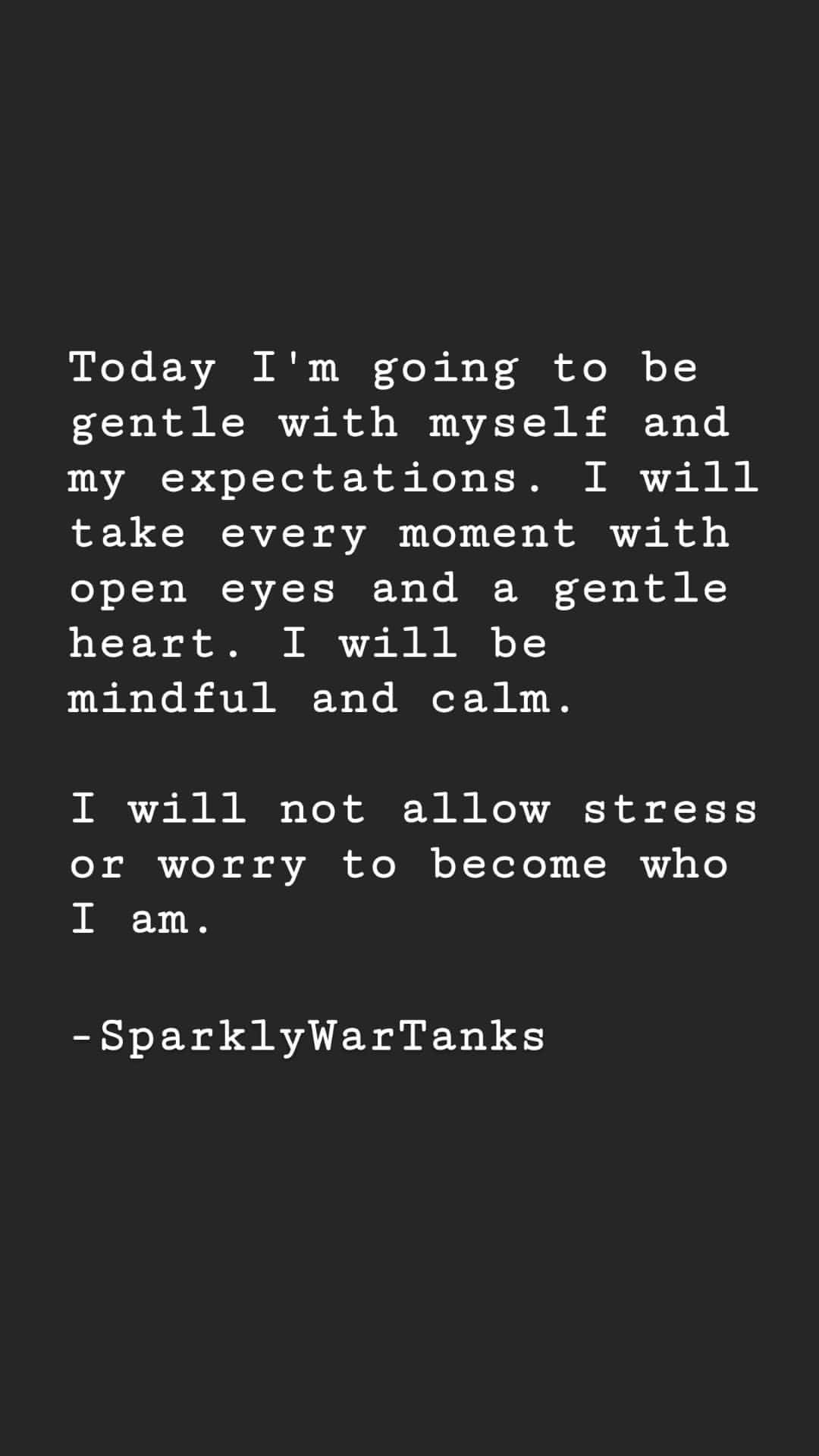
The choice to be calm is a talent. Even with all that goes on in my head, and the worry that sometimes consumes my thoughts, I CHOOSE to be gentle, mindful, and calm.
With each day, I allow myself to reflect, take what I need, let go of what I don’t, and move on with grace.
I will not panic.
I will not worry.
I will not stress.
I will map out my next steps and take one moment at a time.


 If I were to tell you that the lists of things you’ve done, the relationships you have, or the job titles you’ve held don’t make you who you are, would you believe me?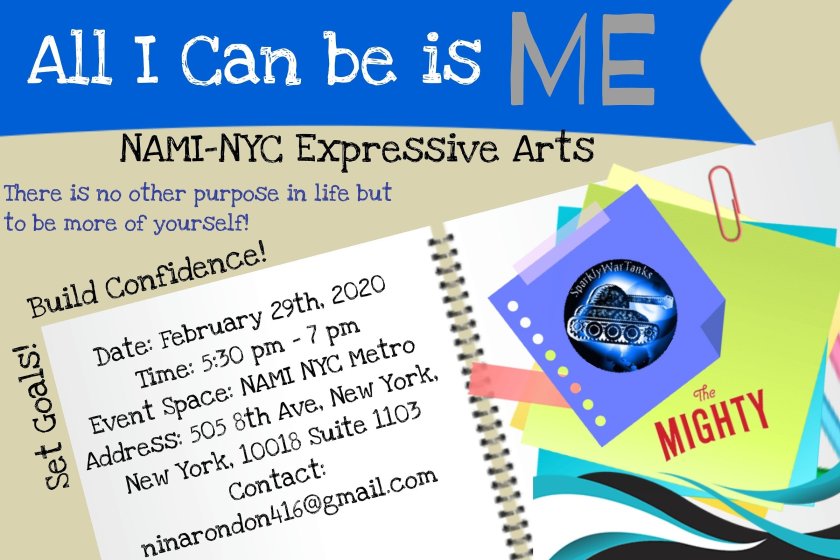





 SparklyWarTanks