Busyness is how some of us distract ourselves from our thoughts and trauma. With so much to do, there is often no time to stop, reflect, and build a relationship with ourselves. In times of isolation, however, it’s more difficult to combat and dismiss the impulse of intrusive thoughts. This may even be the first time some are alone with their thoughts and can’t immediately turn to “doing” to deflect negative patterns of thinking.
What do we do when experiencing an overwhelming spiral of intrusive thoughts?
Acknowledge the thought. Ask yourself, Is this thought familiar?
Identify the feelings the thought brings up. How am I feeling? Why am I feeling this?
Turn to a productive perspective to address spiraling. Is this thought true or intrusive?
Reassure yourself that you are doing the best you can and practice self-compassion. What is triggering this thought and what can I do to help myself reframe/dismiss this thought.
Write down what you are thinking or feeling. How intense is what I’m experiencing?
Ask for help or talk to someone you trust to get a different perspective.
Building a sense of self-awareness takes time and patience. There may even be parts of ourselves we may encounter for the first time and that’s okay. We are all multifaceted. Building a relationship with who we are is important.
This may be the first time we find ourselves actually reflecting, but that doesn’t mean we can’t grow and learn to love all parts of ourselves.
If I were to tell you that the lists of things you’ve done, the relationships you have, or the job titles you’ve held don’t make you who you are, would you believe me? If I were to tell you that you are whole just because, would you think I’m wrong?No matter what we do or who we think we have to become we are fundamentally valuable and worth living every single day. It doesn’t matter how much we get done, or how much we’ve been through, every day we wake up we hold the power of our value and worth and that never changes.”I am” despite of anything that follows that statement.
It’s been a really rough 2020 already. It’s tried to knock you down, step on you, and declare your defeat. What 2020 doesn’t know is you already declared that no matter what, you will figure out how to bounce back EVERY SINGLE TIME. No matter how complicated or complex the struggle, nothing will overcome your resilience.
I know you’re hurting but I also know you learned so much through the pain you endured.
You learned that:
It’s okay to be sensitive.
It’s okay to cry and express emotions.
Learn early how to love and accept yourself.
You are different and that fact will catalyst your passion.
People will look out for themselves.
Put yourself first because no one else will.
You are not like everyone, your self-care looks different.
You don’t need to be with someone to be whole.
Your empathy is powerful, build it up.
You have a soft and gentle spirit, protect yourself, learn how to say no.
Your mind will tell you a lot of lies, declare your power and control over yourself.
People have their own trauma and will show it through their behavior, do not take it personal.
Self-awareness is scary but necessary.
Your mind is very very powerful, use it to create and influence change.
Your purpose is beyond what you can fathom, manifest it with all of your being.
Depression and anxiety will not defeat you.
It’s taken some time to learn these lessons, and probably would have been helpful growing up, but you know now and that’s what’s important. You know that your life is valuable although you may feel tortured sometimes. Keep that smile on your face because its beyond beautiful.
Despite the pain, the tears, and the loneliness, you have a job to do. Get up and keep going.
A boundary is a limit or rule we set for ourselves to honor our inner and outer well-being. Whether that boundary is to protect ourselves, to reserve energy, resources and money, to stop ourselves from the urge to continuously give or “save” another, or simply to respect our personal goals and self-worth, it’s essential to build and maintain personal boundaries.
Personal boundaries are what separate us from giving too much of ourselves to things, people, and situations that do not serve our growth and progress. While it may appear ideal to be able to do everything and anything without limits, we cannot and should not exhaust ourselves of our personal needs. We are responsible for what we allow. Whether in relationships (familial or romantic), with friends, at work, or anywhere where we are interacting with others, practicing boundaries helps us to be in tune with ourselves and our values.
Something to Remember: We are not perfect and cannot do everything or please everyone at the expense of our mental, physical, or emotional well-being.
How can we, therefore, set boundaries that will help us prioritize our needs?
Self-Awareness and Boundary Setting
Increasing self-awareness is an important step when building and maintaining personal boundaries. The more we know who we are and what we are okay with, the more we can establish and sustain boundaries that serve us best. Understanding the balance between too much, too little, and the right amount of energy and effort can push us in the right direction in creating healthy boundaries.
Here are some questions you can ask yourself that will help you reflect and understand whether you need to set stricter boundaries:
How do I feel?
How would I rather feel?
Should I say no?
Do I have time to spare?
Does this make me feel uncomfortable?
Is this benefiting me?
Am I overexerting myself?
Do I need to do this?
Do I want to do this?
Can I do this?
Do I need time for myself?
What is okay/not okay for me to do/say?
When do I speak up?
Does something need to end?
What can I change?
What do I have control over?
Getting into the habit of asking questions is not only a good idea for self-awareness, but also for increasing confidence. Becoming reflective in understanding what we deserve and in what we will tolerate will also aid in a better understanding of self-worth.
How Boundaries Help Strengthen our Mental Health
Boundaries allow us to build a stronger connection with ourselves. Understanding who we are will help us to become more centered and mindful of what is happening around us and to us. Stern boundaries will also help us to prioritize self-care, become more direct and open as well as vocal about our needs, beliefs and values. Being able to say no and express how we feel will give us the autonomy we need to improve our sense of self-worth. We will feel more comfortable expressing ideas and thoughts without shame, embarrassment, or hesitation.
Healthy boundaries can look like saying no when necessary, balancing self-care with work, cutting ties with toxic people and situations, speaking up without feeling like a burden, putting your needs before anyone else’s unapologetically, accepting that you cannot change or save anyone and not trying to, and giving yourself permission to feel and reflect without the opinion of others.
Affirmations to help Maintain and Sustain Positive Personal Boundaries:
I set standards for myself and will stick to them.
I know who I am and what is good for me.
I understand my personal boundaries.
I honor myself and my boundaries.
I have a right to my feelings.
I can firmly state my boundaries.
I am confident in my ability to set boundaries with others.
I will say no when necessary.
I am safe.
I am in control of my life.
Next Steps and Final Thoughts
As we move into a space of self-acceptance and self-awareness remember to honor your boundaries and give yourself permission to grow and reflect on your needs. Continuously grow in your boundaries in love and compassion for yourself.
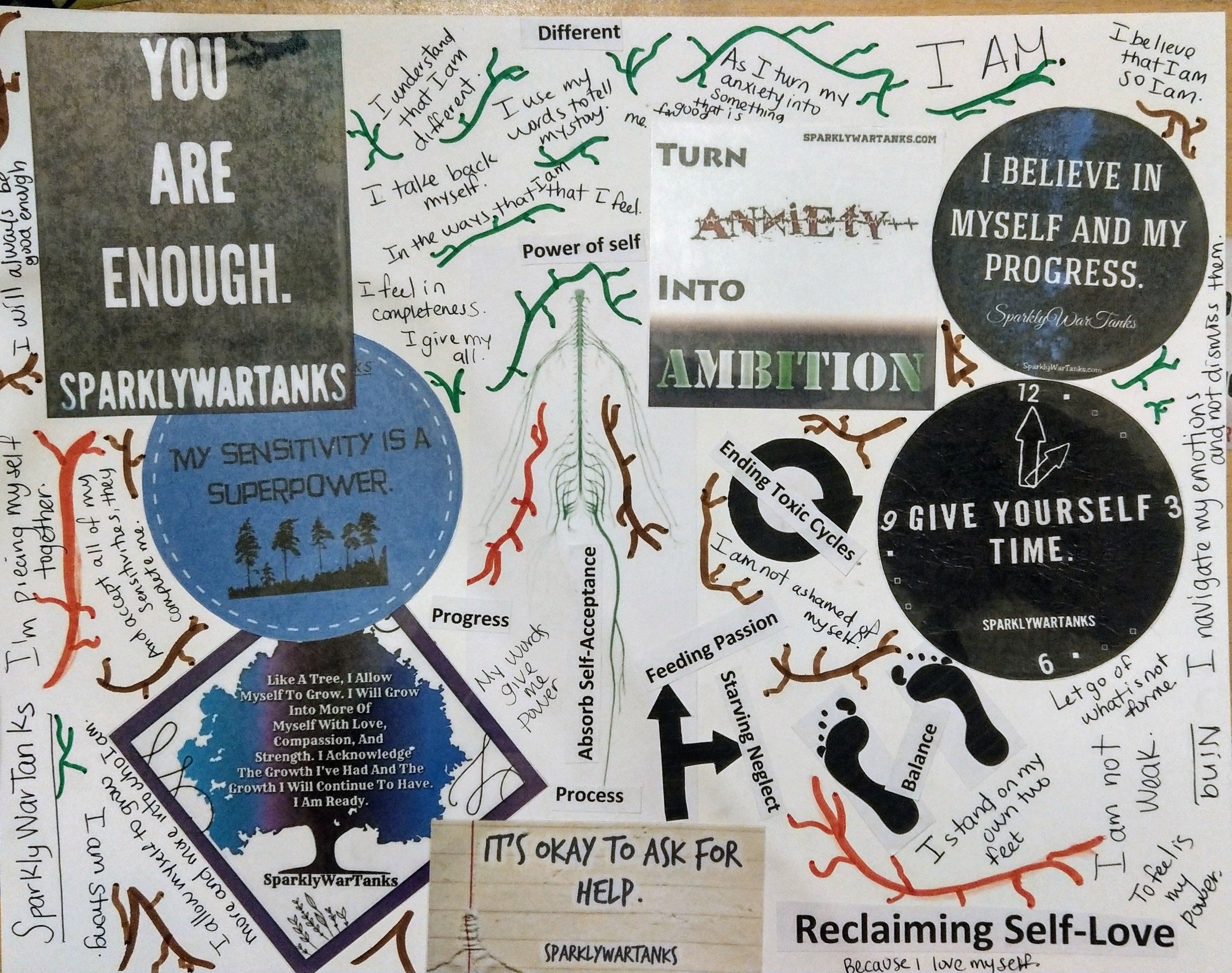
A collage depiction of what self-love looks like inside of me, traveling through my veins.
Going Back to Therapy
For the last month and a half or so I’ve been seeing a therapist for the first time since that one semester in my senior year of college. Although it’s difficult to manage all the emotions that come up as I talk through all of “my stuff”, I’m continuing to come in contact with the parts of me that were previously tucked deeply away. The more I talk and navigate my experiences, the more I’m able to identify the parts of me that need healing.
In these few weeks I learned three big things about my personality, habits, and tendencies:
1. I’m a highly sensitive person and a hopeless romantic.
2. I have issues with feeling good enough and loving myself in the same intensity that I love others.
3. I’m a recovering perfectionist and still struggle with “doing” too much to feel seen. I try to “stay busy” in order to distract myself from feelings unlovable, worthless, and enough. I crave outside stimuli to try to fill a void inside.
The Creative Cure
As I’m learning about what it means to be me, the good and the bad, I found that creativity and writing are my most helpful tools for feeling better.
Because I’m aware of my perfectionism, I’m trying to reverse and redirect the energies I put in “doing”, “pleasing” and “overexerting” back into myself. As I practice what feeds my passion, I’m beginning to realize what love means for me. The more I see what love is for me, the more I can pour back into myself the void of practicing and feeling self-love.
Passion and Learning Self-love
Passion is the manifestation of self-love — It’s love in doing. Passion is one of the only feelings (along with ambition, for example) that can not be given to someone else. To feel passion is to come in contact with something in yourself that feeds your needs and fuels your purpose.
When I create, write, and tell my story I feel passion. Doing what I feel passion for allows me to access peace and satisfaction perfectionism never can.
As I move closer to reclaiming my self-love, allowing it to travel to all parts of me (including my perspective of myself), I will use writing and creativity to help heal me of my self-love wound.
Some Advice
Find your passion. Find what helps you feel good and accomplished. Learn about yourself and learn what love means to you. Feel and access the energy of love. Once you’ve found the peace that comes with love, you can practice love for yourself and with others.
Self-care with unbreakable self-love is powerful and can help you build a healthier you.
Allow yourself to feel even when it gets uncomfortable. Experience your emotions. Understand what is happening and grow in self-awareness.
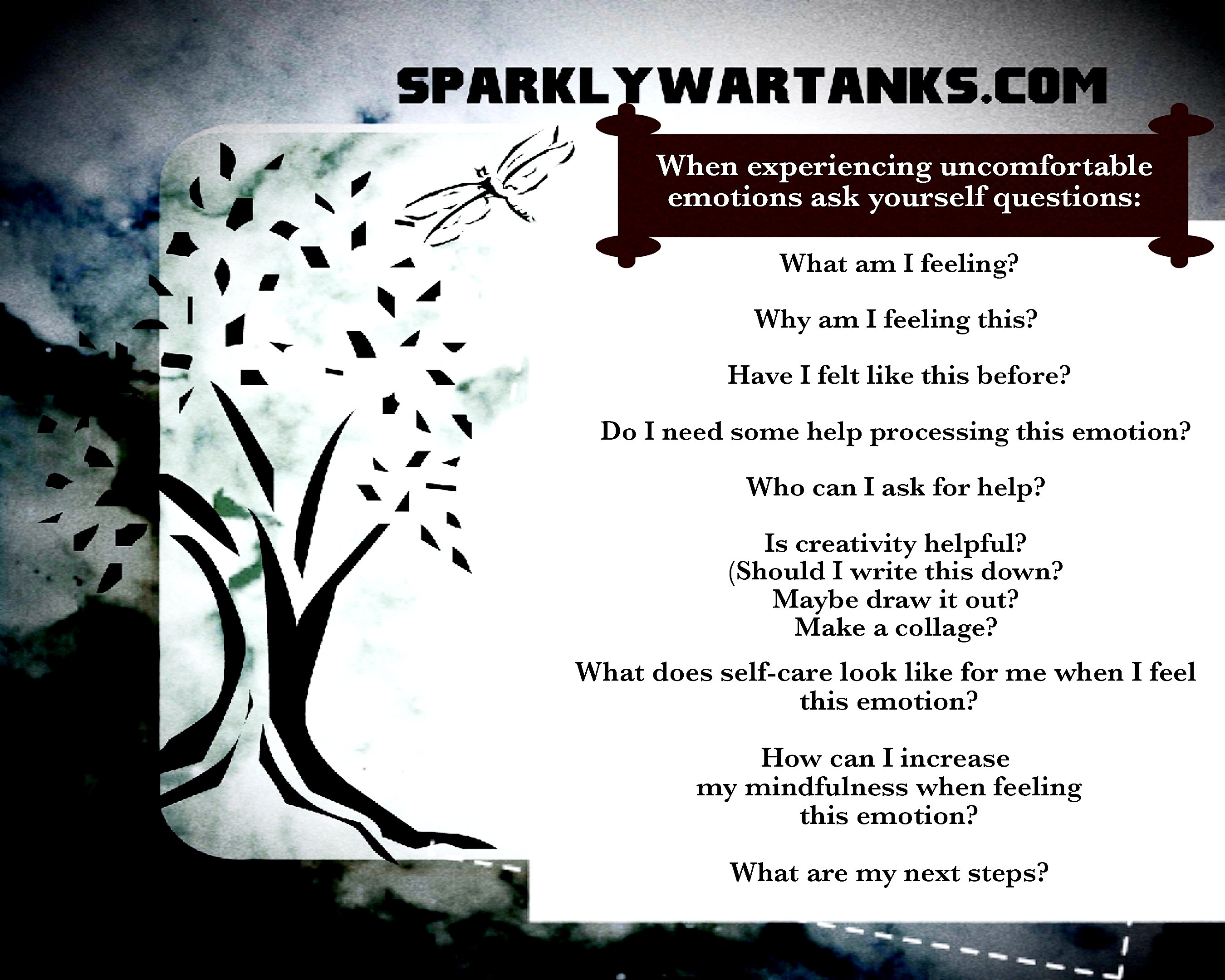
When experiencing uncomfortable emotions ask yourself questions:
What am I feeling?
Why am I feeling this?
Have I felt like this before?
Do I need some help processing this emotion?
Who can I ask for help?
Is creativity helpful? (Should I write this down? Maybe draw it out? Make a collage?
Is this emotion influencing my behavior? Is this behavior helpful or harmful?
What does self-care look like for me when I feel this emotion?
How can I increase my mindfulness when feeling this emotion?
What are my next steps?
**Question graphic! Sticker set will be available in my Etsy shop.**
Experiencing certain emotions can be scary, but allowing yourself to feel shows you how best to support yourself or ask for support.
Feel and not dismiss, reject, or ignore how your body is reacting to your environment and experiences. You can learn so much about yourself by reflecting on what is happening.
Practice self-compassion by giving yourself permission to feel.
Hi, I’m Nina and I’m a highly sensitive person. I’ve hated this about me just about my whole life. The emotions, the intensity, the sensitivities to loud sounds, really bright lights, and too much outside stimulation. I was the “you’re always crying” kid, the perfectionist, and the overthinker; I can overthink just about anything.
It took me till just now, 25 years old, to learn and accept my sensitivities. I feel things so deeply and wish I can turn it off sometimes. I wish I can have long days, hold 2 jobs, and socialize with a large group for hours, but I can’t. Not me.
My sensitivities get me into trouble sometimes. When im overstimulated, I isolate myself to sleep and to recharge…but sometimes I tend to do this in weird moments without a proper farewell to the ones around me.
I’m the Introvert
Hi again, I’m Nina and I’m a highly sensitive person AND I’m also an introvert. I can be on my own for hours crafting and creating things and that gives me so much joy. I’m also quiet, except around 4 people.
My sensitivities have given me some superpowers too, like empathy, even though it feels like a curse sometimes. I feel what others feel and wish I can take their pain away and mine too.
Battles that Come
A mixture of being an HSP, an introvert, and an empath comes with difficulties, though. I’m always in my head, worrying about something, which makes it difficult to think straight sometimes. Because of this, I battle symptoms of depression, a whole lot of anxiety, and panic attacks.
So, self-care is important for me. Drinking lots of tea, minding my breathing, and writing my thoughts out are my favorite go-to remedies.
So, what now?
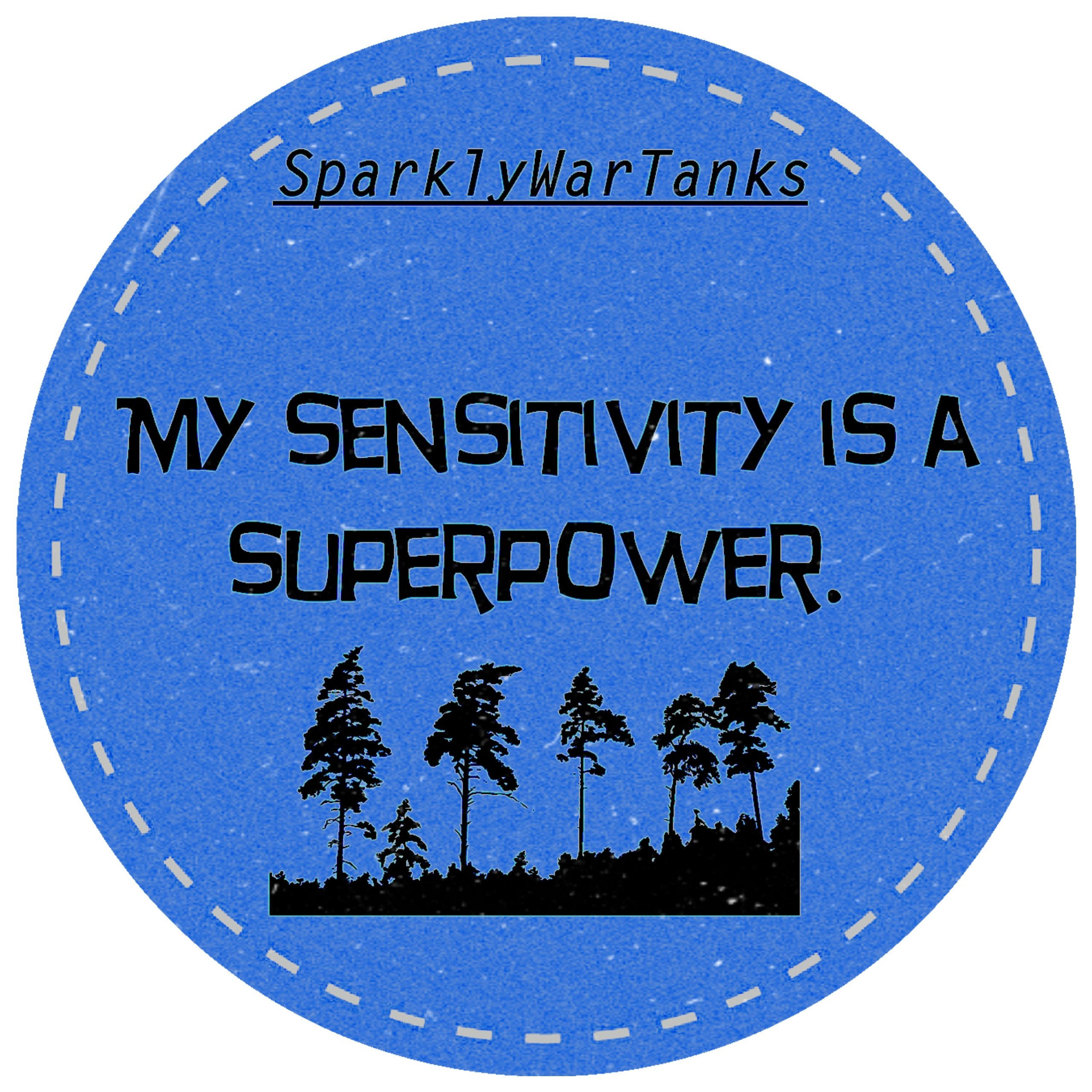
Well, that was a lot to confess. For those parts of me that I’ve hated for so long, I accept them and welcome new methods of self-care that makes life less intense. I acknowledge my sensitivity and honor who I am. I no longer take it as a burden, but as a superpower, an intrinsic part of me. Im different and that’s okay.
*HSP Sensitivity sticker will be available mid to late December in my Etsy shop! Check Etsy.com/shop/MotivateBySWT
To my fellow HSP’s, it’s okay to be sensitive and have different needs. We deserve to be understood too. I know the struggle and feel for every one of you. Let’s prioritize and be gentle with ourselves. We’re important too.
Ever wanted a moment to yourself? Ever wished you could push a “pause” button on life when you feel overwhelmed? I can relate!
I’ve recently learned a mindfulness technique that can help when you feel overcome by negative thinking. Instead of spiraling into a tough place mentally,pause. Mindfulness techniques such as this can help to build self-awareness as well as practice the art of acknowledging without spiraling.
Here are four steps you can take:
#1:Once you witness a negative thought entering your mind, pause. Say it out loud if necessary. Interrupt the thought.
#2:Acknowledge the thought. Notice why you’re thinking it.
#3:Take a deep breath.
#4:Witness the thought as just a thought and let it pass. Do not give in or allow it to shift your perspective.
The idea is to learn how to “pause” at the moment a negative thought is introduced and build mindfulness around self-care and self-awareness. Whether it’s saying “pause” out loud or manifesting a pause in our actions, the act of pausing teaches us to manage our thoughts in hopes of creating a more workable outlook on our lives and experiences.
What’s one thought you can pause today?
“Pause” is an activity/graphic I’ve created for The Mighty!
You see me express myself, I wear my emotional wounds for all to see. I’m building my self-awareness through my healing and it’s because I choose to write about my mental health.
“I write and talk about my mental health because I know what it’s like to feel alone, unwanted, worthless, hopeless, and unaccomplished. I know what it’s like to feel invisible, to worry to the point of a panic attack, and to feel trapped. I write and talk about my mental health because deep down I wish I can hug and show all those who suffer silently that they don’t have to suffer alone. I write to share and motivate others to keep going even if they feel they can’t.
I neglected my mental health and thought I wasn’t good enough or worthy of love and life unless I proved myself to be so. I didn’t understand my intrinsic worth or purpose and because of this lived in a constant state of depression and anxiety.
If you are reading this, know that you are more than. You are full of purpose, power, and worth and nothing and no one can strip you of this. No matter what those negative thoughts said, you are doing a great job and I’m proud of you.”
I’m so proud of all you’ve accomplished this year; from facing your fears and sharing your story to starting therapy and unpacking all that’s going on in your head. The more time goes on, the more you’re growing into the woman that shatters stereotypes and demolishes stigma and that makes you amazing.
From now on here are five promises to make to yourself:
1. Honor yourself and your mental health by setting clear boundaries and never settling for less.
2. Put yourself first because you matter, too.
3. Have some fun, however that looks for you, and be easy on yourself.
4. Take breaks because you deserve to feel energized and ready to take on those big projects you love.
5. Reminding yourself daily that you are enough and DO NOT NEED anyone to validate that FACT.
There’s so much in store for you so stop questioning your worth and value because of how others treat you. Learn to love yourself REGARDLESS. You are a shining light and I hope you learn to believe that.This is the year of reclaiming self.
With all the love in the world
From the best parts of you,
SparklyWarTanks



 If I were to tell you that the lists of things you’ve done, the relationships you have, or the job titles you’ve held don’t make you who you are, would you believe me?




 Dear Nina,
 SparklyWarTanks