To honor your needs is to reflect and prioritize what is most important to you and for you. Honoring your needs allows you to grow in self-awareness and self-compassion.
Become intentional with your needs so you can vocalize and advocate for yourself whenever your needs aren’t being met.
Activity
What are some ways you can honor your needs better?
-What are the ways to best honor your needs?
-Why are those ways important to you and your self-care?
My Reflection
I can honor my needs better by not feeling bad or guilty for being vocal about what I need.
If on the occasion I feel bad about asserting my needs, I tend to fall into people-pleasing behaviors abandoning my needs altogether.
Affirmation: I will be open and honest about what I need and not feel like a burden to others when asserting those needs.
Join this prompt’s conversation here on The Mighty.
As we continue the journey of learning what it means to set goals and carry them out, we come to the question of how to hold ourselves accountable for the goals we set. Without accountability, all we have are thoughts and ideas with potential. Without action there are no results.
Activity
So, what can you do to prioritize the goals you set?
-What actions do you take to prioritize the goals that mean something to you?
-Why are those actions important in your goal setting journey?
-How are those actions holding you accountable for reaping results?
Reflection
As ambitious as I am, I make goals all the time. Making goals isn’t the issue for me, remembering all the goals and making them feasible is how I can hold myself accountable to them. I can accomplish this by writing down my goals once they are manageable then create a plan and to-do list.
Join this prompt’s conversation here on The Mighty.
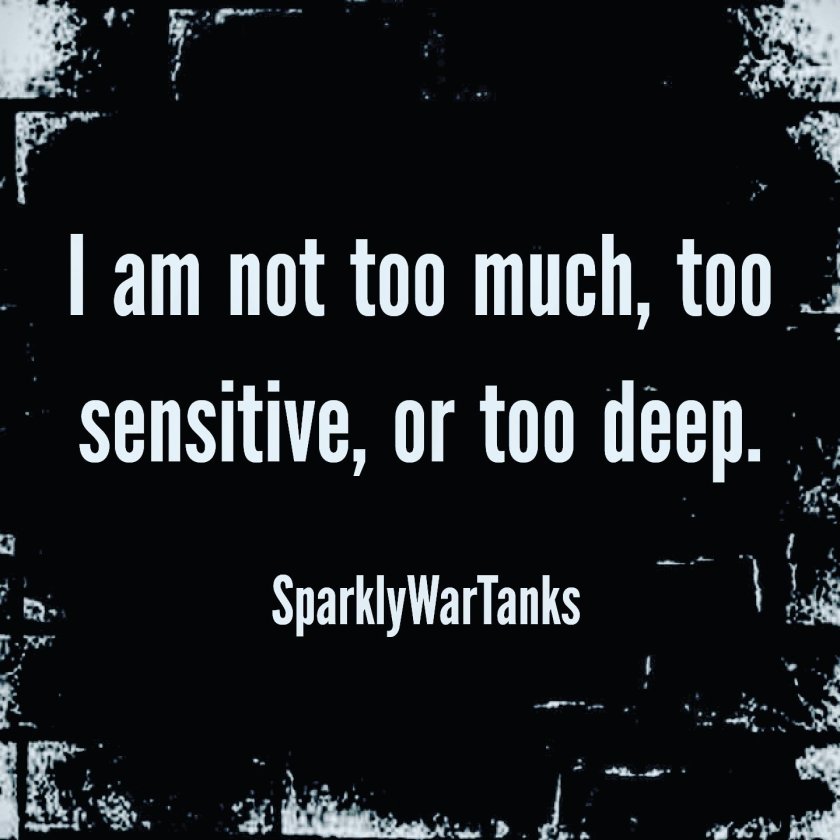
Hi my name is Nina and I’m highly sensitive. Yes, I’ve said this before and yes, it’s something I’m learning to love about myself. Plagued with hearing the phrases like I’m “too sensitive” or “too deep” penetrates my psyche leaving me feeling invalidated and strange.
Yes, I notice things, very subtle things. I notice patterns and changes; I notice character traits and inconsistencies; I notice my feelings from an overwhelming amount of notices. In an attempt to create stricter boundaries for myself honoring my needs and concerns, I express thoughts on these notices. It’s been a tough road as I’ve grown frustrated with how much I feel and all that I notice.
Ultimately, I simply want to be able to express myself without being “too much.” I’m not too much. This is me in my high sensitivity.
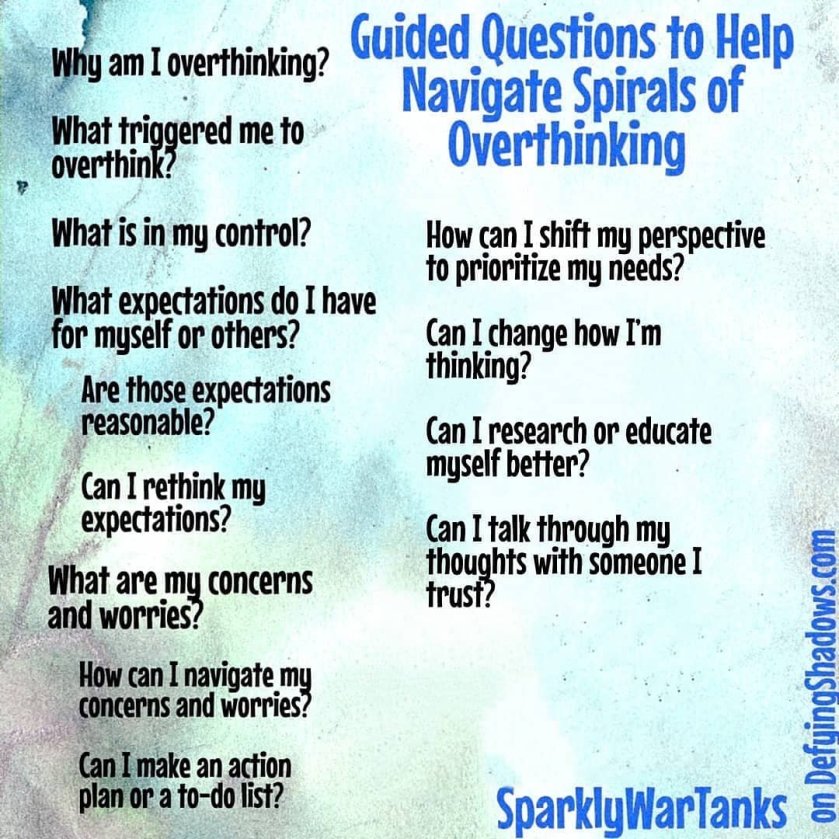
“Overthinking does not have to prohibit you from achieving your goals or taking care of your responsibilities. It’s okay to have concerns and want to think thoroughly through everyday challenges, but instead of overthinking take action while also prioritizing your mental health.”
In a rapidly changing world where “normal” is being redefined and challenged, it feels different and strange to imagine what we once knew as everyday life shifting. It’s mind-boggling to think we are adjusting and adapting. But, what are we adapting and adjusting to? Big buzzwords, for those of us who have been quarantined or stuck at home and even those essential workers going out risking their health every day, are fear, anxiety, productivity, motivation, worth, and purpose.
What does it mean to be productive?
What does it mean to feel motivated?
What does it mean to feel worth and purpose?
How are we learning to self-care and make decisions about how we view ourselves and what we want in life?
What do fear and anxiety mean for us?
What is mental, emotional, and physical health?
How will socializing change or shift?
How do we define success or accomplishments?
As we ponder and navigate who we are during this exhausting period in history, I caution us to be gentle with ourselves and take a step back. Give ourselves time to understand that it’s okay to take a minute or more to slow down. Even with our everyday responsibilities, reflection and self-care are necessary. We are not living the same way we were last year or even a few months ago. We do not have to pile on expectations and lists of things to do. We also can give ourselves permission to prioritize our mental and physical health; make goals, and shorten our lists to things that mean something to us.
Note: Don’t be afraid to put yourself first.
Take a moment to jot down your needs and personal goals. How will you self-care today? Have you been checking in with your feelings and mental state?
Setting goals can be difficult especially if we find ourselves unmotivated or having lots to do. For me, it helps to break up my goals from least likely to accomplish right away to something I can do today.
Activity
This week, let’s focus on our personal goals and ways we can prioritize our self-care.
What is a personal goal you want to set this week?
-What is the goal?
-Why is this goal important to you?
-How can you make sure you prioritize and accomplish this goal?
Reflection
A personal goal that I’m setting this week is honoring my needs by starting my bedtime routine by 11:00 pm. Crippling insomnia has dictated most of this quarantine and I really need to prioritize my sleep so I feel less drowsy and achy the following day.
Join this prompt’s conversation here on The Mighty.
One of the many exiting additions for my group, The Pencil Case, on The Mighty, is Pencil Case Prompts.
The goal of these prompts will be to to think, reflect, contemplate and share.
I will be sharing these prompts here on SparklyWarTanks with a link to the post on The Mighty!
Note: Pencil Case prompts are journaling prompts you can use for personal journaling or to answer in the comments for The Pencil Case Prompts posts. The prompt will always have two follow up question: What and Why to help us turn our thinking caps on!
Prompt 1
One thing that helps me to keep going is to remember random moments where I felt good. Some of those moments are moments where I accomplished/achieveved something and felt proud of myself or recalling my talents and things only I can do the way I do it.
Activity
What is an accomplishment, achievement or talent you are proud of?
What is the accomplishment, achievement, or talent?
Why is it important to you?
Note: There is nothing too big or too small to mention as an accomplishment, achievement, or talent.
Reflection
I know I mention this ALL THE TIME but I’m so proud of myself for 1. starting my brand and 2. expanding my brand to Motivation by SparklyWarTanks.
There was a point in my life where I didn’t think I would be anything or do anything worth mentioning. Being able to continuously work on something helps me in my darkest loneliest moments to remind myself that I CAN do what I SAY I can do.
Join this prompt’s conversation on The Mighty here.
“Because isolation can negatively impact our mental health, influence spirals of negative thoughts, negative self-talk, and symptoms of depression, anxiety, and loneliness; understanding power, control, productivity, and expectations can redefine and reshape how we approach each day. How can we recreate, readjust, and adapt to this new form of living? How can we prioritize our mental health?… Note:Self-care is personal and can change based on our day to day needs. Whatever we find is the best/most helpful way to cope can only be defined by us.”
Meditation and mindfulness are two complementary practices that can help enrich the relationship and connection we have with ourselves. Although different in subtle ways, meditation and mindfulness can teach self-compassion, self-awareness, peace, relaxation and calmness. When used together, meditation and mindfulness can also help to build and maintain a healthy relationship with the mind and body.
Meditationand Mindfulness
Meditation: Meditation is a practice and skill that welcomes calmness, stillness, focus, and concentration. By allowing the mind to focus and concentrate on the present moment, meditation helps to manage problems and consider solutions by developing the skills to navigate thoughts and ideas. With aiding in concentration, meditation also helps with calming internal turmoil and chatter. Meditation is a discipline and like any discipline takes practice and patience.
Mindfulness: Mindfulness is the skill, technique, and process of cultivating non-judgmental awareness of our thoughts, environment, and feelings. While it’s easy to over-analyze and overthink to gain control of our thoughts and feelings, mindfulness teaches us the power of noticing and observing. Without the urge to critique or change how we approach our thoughts, we are able to realize when and why those thoughts occur. To be mindful is to intentionally interact with our mind and body to welcome peace, relaxation, and rest. Like meditation, mindfulness seeks to draw attention to the present moment with awareness and intention.
Active Mindful Meditation Techniques
Note: Active mindful meditation combines the concentration and calmness of meditation with the non-judgemental awareness of mindfulness by accepting, noticing, and living through the sensations and experiences of the present moment.
Mindfulness Breathing
Thich Nhat Hanh, a Vietnamese Buddhist monk and peace activist in The Miracle of Mindfulness: An Introduction to the Practice of Meditation states “breath is the bridge which connects life to consciousness, which unites your body to your thoughts. Whenever your mind becomes scattered, use your breath as the means to take hold of your mind again.” Relying on our breath gives us the choice to return our attention to the present moment. While mindful breathing can be practiced in the crossed-legged position sitting upright as traditional meditation persuades, it can also be done at any time and anywhere, especially when feeling stressed or overwhelmed.
Step 1: Focus your attention on your breathing.
Step 2: Practice a rhythm of breathing that works best for you (either with your eyes opened or closed). Some examples of rhythmic breathing include:
Counting (whether for three, five, or ten seconds) as you inhale slowly, then counting again for the same amount of seconds as you exhale.
Using the 6-3-6 technique by inhaling for six seconds, pausing for three seconds before exhaling, then exhaling for another six seconds.
Simply observing the natural sensation of breathing itself.
Step 3: With each inhalation, focus on the inbreath and observe the sensation, warmth and coolness of breathing in. As you exhale, draw attention to your lungs, expanding diaphragm, and tip of your nose.
Step 4: Notice the thoughts that come up while you are breathing. As the thoughts appear imagine them drifting away with every breath.
Step5: Continue in this rhythm of mindful breathing as long as you feel it necessary.
Mindfulness Eating
Mindfulness eating builds awareness and improves the relationship we have with what foods we consume on a daily basis.
Step 1: Focus your attention on what you are eating. How hungry are you? Can you hold it in your hand? How does it feel? How does it smell? Is your mouth watering? Notice your thoughts as you begin to eat.
Step 2: Notice the food in your mouth, the temperature and texture of the food, and how you are chewing. Observe the sensations in your jaw as you are chewing and swallowing your food.
Note: Mindfulness helps with impulse eating by increasing your awareness to make choices concerning your eating habits. Why are you eating? Are you hungry? When was the last time you had a meal?
Mindfulness Walking
Mindfulness walking focuses awareness on both the body and environment.
Step 1: Choose your favorite place to take a walk whether it be a park, your backyard, a beach, garden or other desired place.
Step 2: Start by standing and evenly distributing your weight on both feet. Observe and feel your body balance on the solid ground. Before starting to walk, mentally scan each part of your body for pain, stress or tension.
Note: Body scanning is a mindfulness technique that allows you to navigate bodily sensations. You can practice body scanning at any time while doing multiple activities. Body scanning is increasing awareness of how your body feels at any given moment.
Step 3: Begin to walk! Notice and become mindful of how you are walking. Take note of how your feet are touching the ground as you walk forward. Slowly move your attention to each part of your body from your feet to your ankles all the way up to your hips. What are the sensations in your feet, ankles, shins, calves, joints, and hips?
Step 4: Notice the air blowing against your skin. What are you thinking? How do you feel?
Note: Active meditation and mindfulness increase your focus and awareness of your body movements and thoughts. There is no need to regulate or change how you would regularly perform these actions; simply notice and observe.
Understanding the Power of Making Mindful Choices
Some find meditation, in its traditional sense of restricted practical consciousness, stillness and focus to be difficult to practice especially when experiencing racing thoughts and stress. By utilizing active meditation techniques, it’s possible to not only incorporate meditation during our every day schedule, but also increase awareness and become mindful of our present self. By understanding our body and needs, we are able to appreciate the power of having and making choices on a moment by moment basis. To have choices reminds us of who we are and what we are capable of.
Reminder: Check out my certifications tab to see all I learned and the link to the mindfulness course I took!
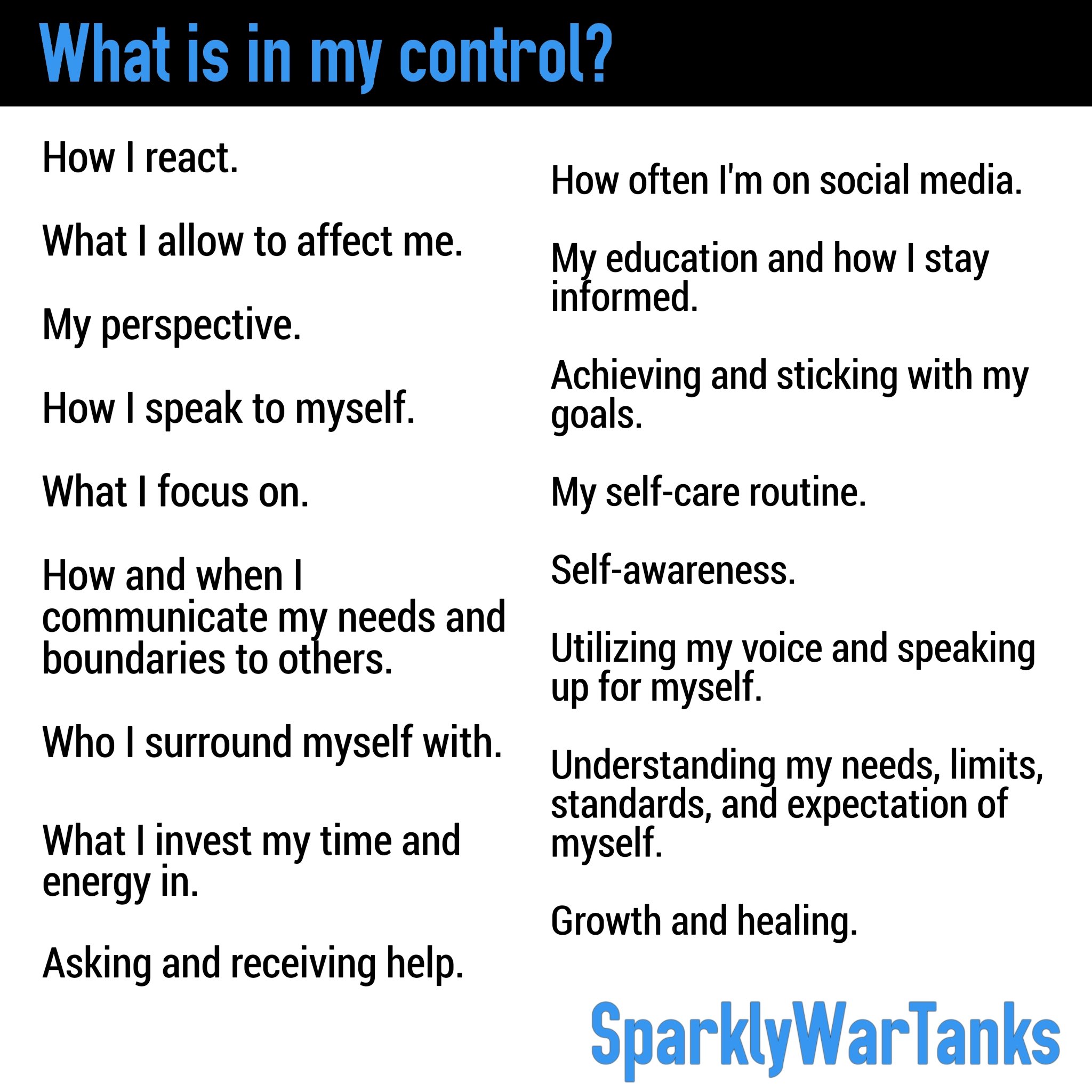
In times of uncertainty, shift your perspective from what you can’t control to what you can. Allow yourself to create a safe space within yourself when what’s outside isn’t serving your needs. There are things you can control and your actions and self-awareness are two of those things.
Busyness is how some of us distract ourselves from our thoughts and trauma. With so much to do, there is often no time to stop, reflect, and build a relationship with ourselves. In times of isolation, however, it’s more difficult to combat and dismiss the impulse of intrusive thoughts. This may even be the first time some are alone with their thoughts and can’t immediately turn to “doing” to deflect negative patterns of thinking.
What do we do when experiencing an overwhelming spiral of intrusive thoughts?
Acknowledge the thought. Ask yourself, Is this thought familiar?
Identify the feelings the thought brings up. How am I feeling? Why am I feeling this?
Turn to a productive perspective to address spiraling. Is this thought true or intrusive?
Reassure yourself that you are doing the best you can and practice self-compassion. What is triggering this thought and what can I do to help myself reframe/dismiss this thought.
Write down what you are thinking or feeling. How intense is what I’m experiencing?
Ask for help or talk to someone you trust to get a different perspective.
Building a sense of self-awareness takes time and patience. There may even be parts of ourselves we may encounter for the first time and that’s okay. We are all multifaceted. Building a relationship with who we are is important.
This may be the first time we find ourselves actually reflecting, but that doesn’t mean we can’t grow and learn to love all parts of ourselves.









 SparklyWarTanks